Within the demanding realm of contemporary pro-level drifting, success is not merely solely a product of raw engine power or driver courage. Instead, it has evolved into a multifaceted discipline that necessitates a scrupulous marriage of choosing a time-tested car, outfitting it with the correct drift-spec parts, and, most importantly, comprehending its dynamic behavior on the track through sophisticated drift telemetry software. This definitive handbook functions as your roadmap from the initial idea of a competition vehicle right through to the last telemetry-optimized tweaks that transform a strong vehicle into a repeatable champion. We will examine in detail the methodical process of chassis dynamics adjustment, showing how a state-of-the-art vehicle dynamics tool like GripDial removes guesswork and offers unmatched insight into your chassis's real-world dynamics.
The cornerstone of any great competitive sliding vehicle is, without question, the chassis itself. A select group of vehicles have earned iconic standing within the international oversteer scene due to their natural balance, durable build quality, and the vast availability of aftermarket components available. Picking the right platform is the first and most significant decision a driver will make. To illustrate, the the E36 generation BMW is universally acknowledged as among the greatest all-around drift cars of history. Its near-perfect balanced front-to-rear weight, combined with a RWD layout and robust inline-six engines, forms a car that is simultaneously forgiving for beginners and highly capable in the control of a pro pilot. The evolution of this lineage, the BMW E46, builds upon these attributes with a even more refined chassis, wider stance for greater confidence, and yet a greater degree of lock directly from the OEM. A distinct powerful platform in the pro circuit is the Corvette C6.
This V8-powered sports car offers a particular combination of benefits to the drifting sport, including a low-mass alloy chassis, a transaxle-style transaxle that contributes to an perfect front-to-rear mass ratio, and the immense torque of a powerful LS V8 motor. This fusion renders it an utter weapon on track, designed of initiating and sustaining extended drifts with seemingly easy application of acceleration. For builders seeking outstanding bang-for-the-buck, the Nissan Z33 rises above as a excellent candidate. It comes from the factory with a rigid platform, a competent original limited-slip differential, and the free-revving VQ35DE powerplant that offers sufficient horsepower and torque for learning and progressing in the activity. Its newer version, the Nissan Z34, offers additional refinements in body strength, steering geometry, and overall motor performance, establishing its status as a common selection among serious pilots. Additional iconic cars that merit consideration encompass the lightweight rotary-powered Mazda FC RX-7, the most popular Nissan S13, the V8-powered Ford SN95, the modern BMW E90, and the compact yet unbelievably fun and instructive Mazda Miata. All of these platforms offers a unique array of characteristics, complexities, and capabilities, but they all share the core ingredients essential to become a competitive drift machine.
However, picking the right platform is merely the first step. To unlock the true performance of any of these cars, substantial upgrades to the steering geometry and chassis control systems are utterly essential. This is where the world of specialist aftermarket components becomes critical view. The one most transformative modification for a purpose-built drift machine is the fitting of a maximum-angle angle modification kit. These engineered systems, such as those engineered by industry leaders like SLR Speed, are designed to radically enhance the car's available steering angle. A standard street car is severely restricted in how far its front wheels can turn, a design trade-off for on-road driving. In sliding, however, extreme steering input is constantly required to control and hold a drift. An steering kit exchanges the OEM steering knuckles, rod ends, and sometimes A-arms with parts that permit the steered wheels to reach steering lock over 70 or even 80 °, as opposed to a average stock limit of around 40 to 50 °.
This immensely increased steering angle offers the driver with significantly more authority during a angle, making it much easier to start a drift, maintain it through a extended corner, and change smoothly from one side to the opposite. The improvement in controllability is absolutely profound. Combined with a properly chosen modification is the equally critical modification to the car's damping system. Store-bought or including high-end road adjustable suspension are simply not intended for the particular and brutal needs of drifting. A purpose-built set of suspension units is crucial. These engineered suspension components incorporate custom damping rates and spring rates that are designed for the violent mass transition that is inherent of drifting. When a pilot begins a slide, the car's mass is transferred rapidly to the front of the turn. Proper performance suspension manage this transfer in a controllable way, enabling the vehicle to stabilize quickly and offering the pilot precise feedback through the controls and driver's seat. They also provide accurate tuning of ground clearance, shock absorber stiffness, and corner weighting, which are all fundamental parts of dialing in the vehicle's handling to a given venue or driving technique. As a system, a precision-engineered angle modification system and a expertly selected pair of performance adjustable dampers are the absolute physical foundation upon which all later tuning is based.
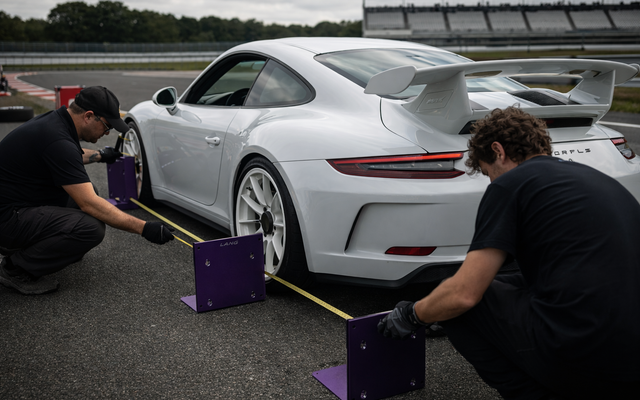
Once the essential components is in place, the following essential step in the project is the meticulous setting of the car's alignment. This is the world of vehicle alignment optimization, a methodology that can seem overwhelmingly complex to the beginner but is, in reality, the secret to converting a assembly of capable components into a harmonious and consistent vehicle. The most discussed aspect of suspension geometry for oversteer is definitely negative camber. Camber angle is the angle of the tire in relation to the upright axis when looked at from the front of the car. If the upper part of the wheel is angled towards the chassis, this is called camber-in. In drifting, an inward tilt on the front wheels is universally applied and is seen as essential. The logic is fundamentally related to tire contact.
When a vehicle is cornering at limit sideways angles, the frame tilts to the external of the bend. This body roll makes the outside steering tire to reduce its best grip area with the asphalt. By applying an inward tilt, the tire is pre-angled to account for this tilt. As the chassis tilts into the turn, the outside front tire gains a better contact patch on the road surface, maximizing its traction at the precise time when it is most required for directional command. Typically, front axle adjustments for a serious drift car range from approximately -3 degrees to as much as -5 degrees or even beyond, contingent on the parameters of the car geometry, tire type, and operator style. The rear axle wheels also employ inward lean, but the settings are usually more conservative and subtler than the front. Overly aggressive inward lean at the rear can result in the chassis overly tail-happy and challenging to predict on acceleration input, as it reduces the available tire footprint of the driving wheels during forward power delivery. Thus, rear axle adjustments are commonly in the range of -1 degree to -3 degrees, striking a delicate compromise between providing enough lateral grip to help in starting and sustaining the drift while simultaneously preserving good hook-up for acceleration the bend. Camber is merely one element of the larger tuning equation, which furthermore encompasses toe setting, self-centering steering, and suspension-induced steering modification.
Toe refers to the angle of the tires when looked at from above. Positive toe means the front edges of the tires are closer together than the rear edges, while negative toe means the reverse. For drifting, a slight amount of front negative toe is often run to improve the initial steering response, making the vehicle feel more agile and willing to begin a slide. Rear axle toe setting is usually set to neutral or a very minute amount of toe-in to promote stability under acceleration. caster angle is the frontwards or aft tilt of the steering axis when looked at from the side of the car. Increased positive caster improves feedback and high-speed confidence, and it also boosts camber effect during steering, which is highly advantageous. Tuning these settings is a complex interplay where a change to one setting can and will influence the remaining parameters. The conventional approach for tuning a car's suspension geometry for competition has historically been a tedious process of guesswork and adjustment. A driver or crew would apply a change based on intuition, run the car on track, use the operator's personal feel and comments, and then apply an additional change. This process would iterate time after time until the chassis felt "good" or the scheduled practice session was exhausted. This approach is not only extremely wasteful in terms of time and tires, fuel, and parts, but it is furthermore fundamentally flawed.
Human sensation is a notoriously unreliable data source, colored by many variables such as fatigue, varying track grip levels, ambient heat, and simply the focus of the driver on that given day. What feels "oversteery" on one run might feel "understeery" on the next lap, resulting in confusing information and counterproductive tweaks. This age-old challenge in chassis setup is exactly where state-of-the-art engineering tools has intervened to revolutionize the landscape.
The development and adoption of sophisticated suspension tuning applications has ushered in a radically different paradigm for engineering and optimizing high-performance drift cars. These systems, represented by innovative products like data acquisition tools, operate by physically capturing the live dynamic movement of the chassis as it is piloted on the track. As opposed to using personal feedback, these tools collect quantifiable metrics on critical parameters such as shock absorber movement, corner velocities, G-force loading, lock position, and accelerator and brake pedal input. This raw information flow is then processed by powerful algorithms that can graph and analyze the data in a comprehensible way. For the very first time, engineers and crews can observe precisely what the car is performing at each moment of a drift. This ability revolutionizes the whole suspension tuning workflow. Think about the particular challenge of setting the front axle camber for a specific vehicle. As an alternative to applying a adjustment from -3 degrees to -3.5 degrees and then running many passes to try and "sense" a difference, a suspension tuning tool can provide instant and irrefutable data. The software can show graphically how the wheel's contact patch is performing during the key stages of a slide: the initial flick, mid-corner, and transition. It can demonstrate if the current value is enabling the outside front tire to achieve maximum grip or if the rubber is overloaded on its outer edge.
The software can then suggest empirical advice for adjustment. Perhaps the telemetry indicates that the outside front tire is even stressing its edge at -3.5 degrees of negative camber, implying that a move towards angle, say -4 degrees, might be advantageous. On the other hand, the information might indicate that the tread is failing to reaching optimal operating temp or that the inner edge is degrading unevenly, which could suggest that there is excessive angle and a modest reduction back to -3.2 degrees would be more optimal. This level of precision and useful intelligence was simply impossible in the era of exclusively mechanical adjustment.
The benefit of utilizing a comprehensive drift telemetry system extends well beyond merely optimizing alignment. It functions as an invaluable coilover setup tips that is customized to your exact car. When fine-tuning the damping values car alignment tuning on your coilovers, instead of relying on general guidelines or replicating another team's setup, you can use the software to observe how the chassis is performing in relation to your changes. The software can show the wheel movement data over a lap, highlighting if the shocks are controlling the weight transfer effectively or if they are causing the vehicle to oscillate too much after a transition. It can aid in pinpointing problems like hitting the bump stops or losing droop, allowing you to make data-backed choices to preload settings, damping rates, or stance. This methodology applies similarly to the intricate process of corner balancing. In addition to camber, the software can offer insight into how modifications to toe and caster are affecting the car's stability during different maneuvers of a drift. For example, it can help you to determine the optimal amount of front toe-out for your specific steering setup and driving technique by analyzing the quickness of turn-in reaction and the stability of the chassis at maximum steering angle. This makes the system an extremely effective performance optimization handbook that is dynamically informed by the real-world behavior of your specific car on the tarmac. It shifts the complete process from a subjective skill into a scientific development exercise.
Additionally, the utility of a platform like GripDial is not at all limited to expert teams with large budgets. For the club-level enthusiast, it functions as an incredible educational tool. It effectively gives the driver with the analysis of a professional dynamics engineer without needing the typical overhead. It accelerates the development time by giving unambiguous answers to questions that would traditionally take years of trial and drift telemetry software error to answer. A builder can see how their individual vehicle behaves to specific inputs, building a more profound understanding of car control in the journey. It also makes accessible high-level suspension engineering principles, permitting anyone with the desire to perfect their vehicle to accomplish it in a systematic and productive manner. This is especially important in a discipline like drifting, where engineering expertise has traditionally been a closely guarded advantage among professional teams. Now, that power can be in the hands of any serious enthusiast.
In summary, the path to building and dialing in the ultimate championship-contending drift machine is suspension tuning tool a multi-stage endeavor that seamlessly integrates proven hardware wisdom with cutting-edge telemetry solutions. It starts with the informed choice of a proven platform, then enhanced by the integration of essential drift-spec components like high-performance steering angle kits and correctly specified competition coilovers. The process then advances into the intricate stage of alignment optimization, where parameters like negative camber, toe, and caster are meticulously adjusted to complement the car's modified geometry and the pilot's specific technique. Ultimately, and what genuinely separates the today's approach from the traditional methods, is the integration of a advanced suspension tuning application. This tool removes the approximation and inefficiency of only seat-of-the-pants setup by providing objective, actual information on how the chassis is truly functioning. It serves as an indispensable engineering partner, a definitive coilover setup manual, and a comprehensive chassis development system. As a complete package, this complete approach ensures that all component of the drift car—from the choice of the chassis to the most minute adjustment on the damper—is optimized for peak success on the track. It embodies the complete progression of the discipline of drifting, merging raw pilot talent with surgical chassis dynamics to create the perfect competitive machines imaginable.